Olympia Express is often referred to as the Rolex of espresso machines. It's a comparison that gets made a lot, and it's not hard to see why. The attention to detail, the build standards, the use of premium materials where other manufacturers cut corners, and the fact that machines from the 1970s are still in daily service. It all adds up to something genuinely different from the rest of the market.
If you've been looking at the Olympia range and trying to decide between the Cremina, the Cremina SL20 and the new Maximatic, you're already asking the right question. These are all exceptional machines. The differences between them are real though and worth understanding before you commit. Here's how I see them.
The Olympia Cremina
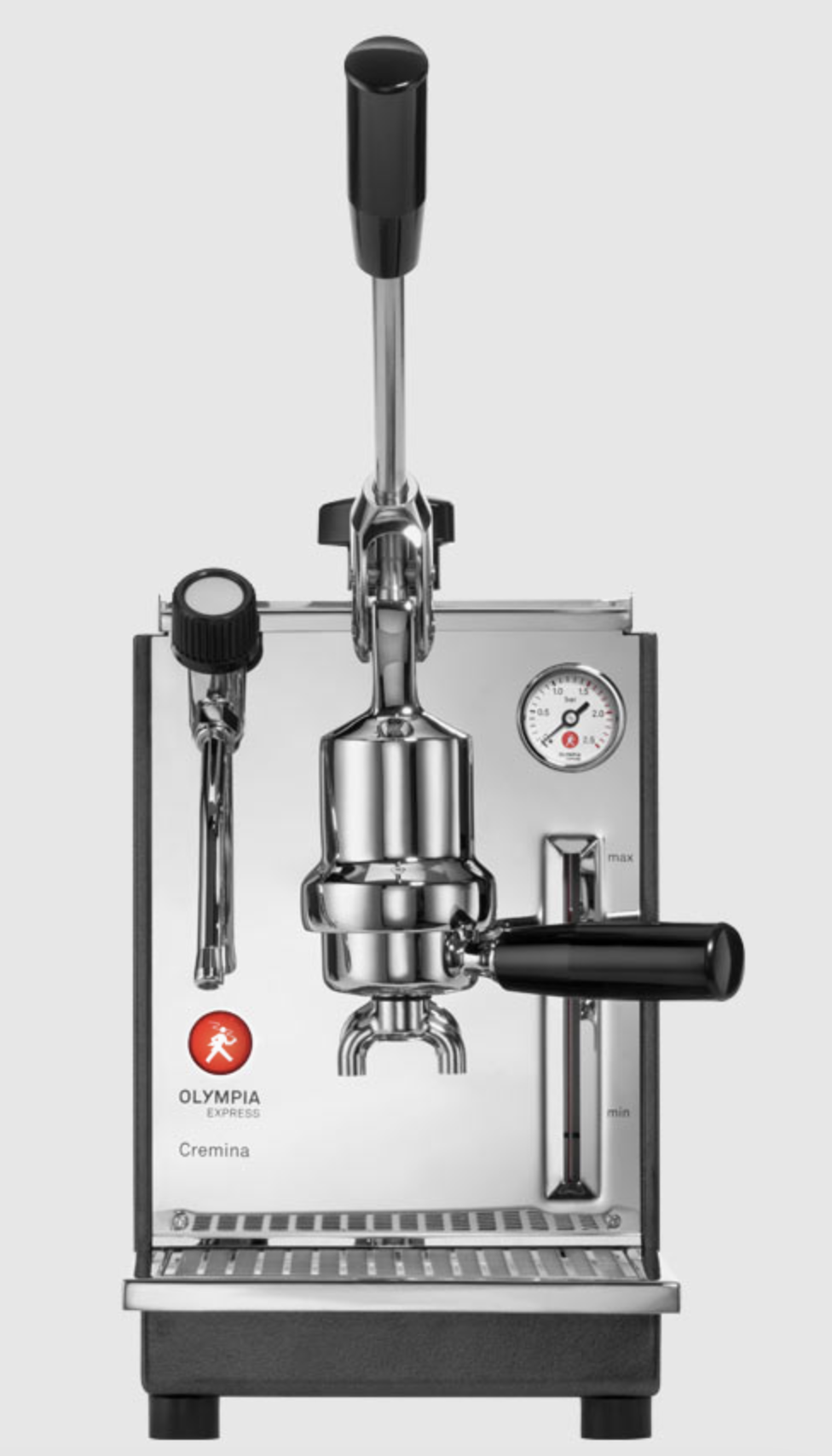
The Cremina was introduced in 1967 and has been in continuous production ever since. That's not a marketing line, it's genuinely remarkable. Very few objects of any kind survive in essentially the same form for nearly 60 years because the market still wants them. The Cremina has- because it's that good.
It's a hand lever machine. You lower the lever and manually drive the piston through the group aiming for a naturally declining pressure profile which starts high and tapers off as the shot develops. Many lever enthusiasts consider this the most flavourful way to pull espresso and they're not wrong. The result tends to be sweeter and rounder than what you get from a fixed 9-bar pump machine, particularly with naturals and lighter roasts where nuance can shine.
The build reflects everything Olympia is known for. Stainless boiler, machined stainless body, components made to be fully serviced and replaced indefinitely. There is no planned obsolescence here. Buy one well, look after it and it will genuinely outlast you.
The Cremina does ask something of you in return. It rewards technique and can punish complacency, but it's not that hard! The learning curve is there, but most people who take it on find it deeply satisfying rather than frustrating. If you want full engagement with every shot you pull, this is the machine for it.
TC Rating — Olympia Cremina
Build Quality | 10 / 10 |
Espresso Quality | 8.5 / 10 |
Ease of Use | 6 / 10 |
Daily Convenience | 6 / 10 |
Value for Money | 8 / 10 |
Overall TC Rating | 8 / 10 |
Low convenience score reflects the lever learning curve, not a flaw. For the right person, that's part of the appeal.
The Olympia Cremina SL20
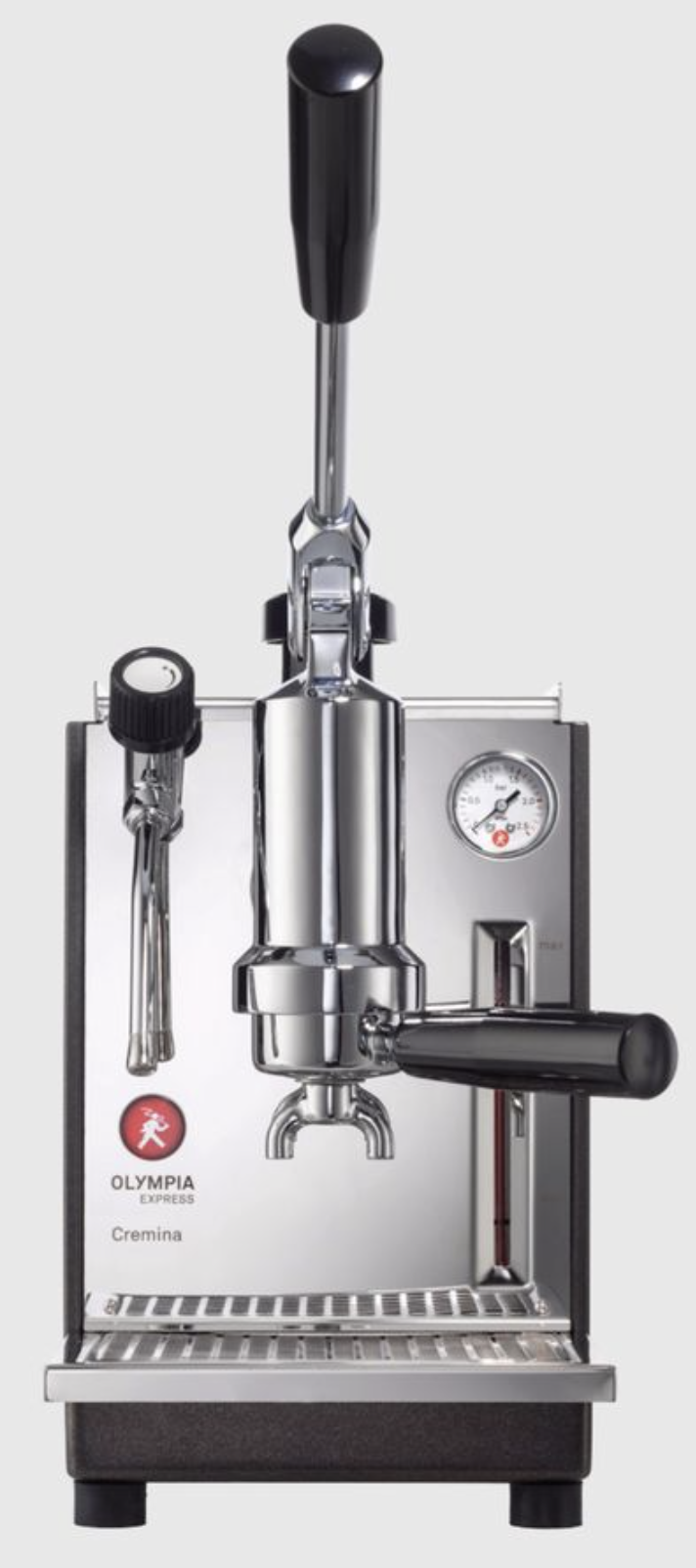
The Cremina SL20 is the current production evolution of the original. Olympia have taken the same core philosophy and refined it with updated internals, better ergonomics and the benefit of everything they've learned since 1967. The spring lever mechanism remains, the pressure profile remains and the fundamental character of the machine remains. What's improved is the execution because you can multitask.
If you're new to the Cremina and asking which one to start with, the SL20 may well be the answer. The machine incorporates the latest manufacturing refinements and has many happy owners. The original Cremina holds its own completely, but the SL20 is where you can texture your milk while the shot is pulling. You are however limited to 6Bar shots: Not better, nor worse, but different.
Like its predecessor, this is a machine built with no concessions to cost-cutting. Every component is made to be serviced. The build standards that make Olympia comparable to Swiss watchmaking are present here in full.
TC Rating — Olympia Cremina SL20
Build Quality | 10 / 10 |
Espresso Quality | 8 / 10 |
Ease of Use | 7 / 10 |
Daily Convenience | 7 / 10 |
Value for Money | 9 / 10 |
Overall TC Rating | 8.5 / 10 |
The refinements over the original Cremina are meaningful. This is our pick if you're coming to the lever machine for the first time.
The New Olympia Maximatic
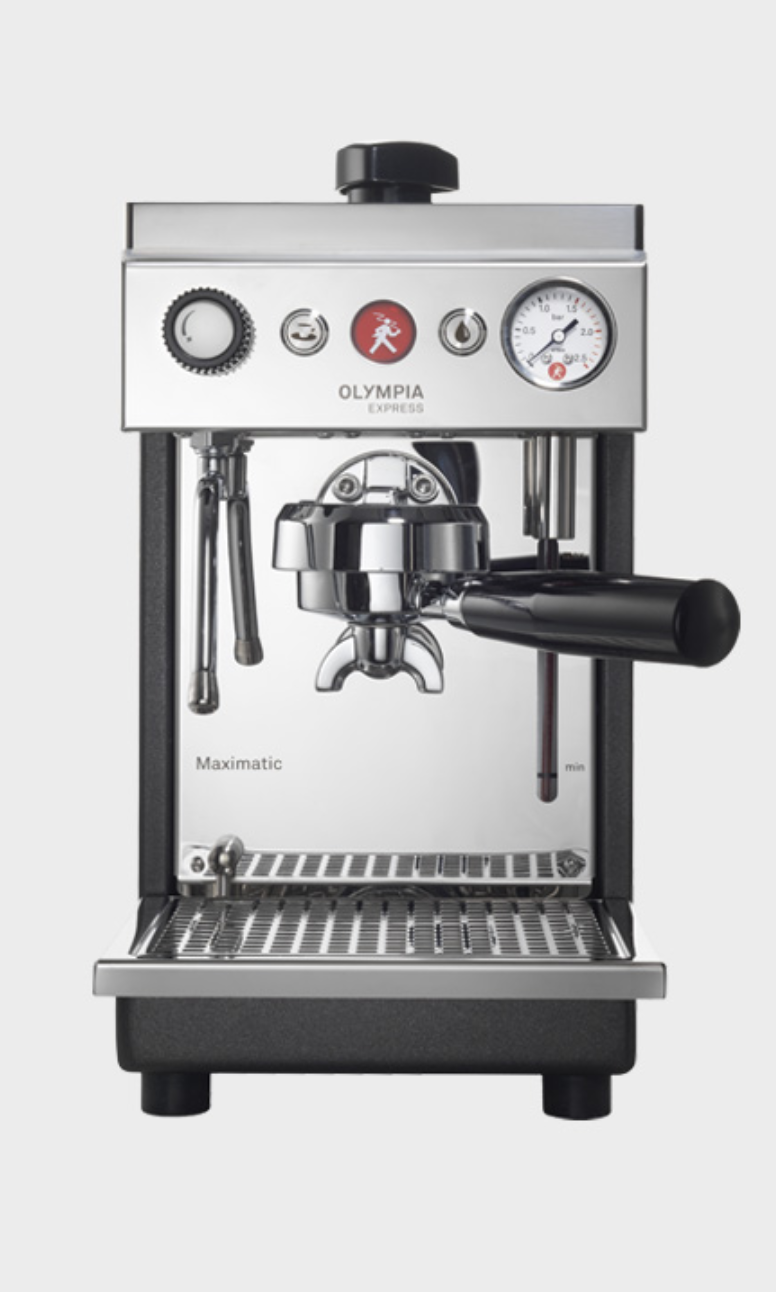
The Maximatic is a completely different animal. Where the Cremina and SL20 are lever machines, the Maximatic is a pump-driven espresso machine built around a proprietary group. No lever to manage and no spring mechanism. You dial in your grind, dose, tamp and let the machine do what it was built to do.
The new version adds a dedicated hot water outlet, which turns out to matter more than it sounds. Once you have one, producing that lungo, a tea or anything which needs hot water without messing with the kettle becomes part of how you use the machine every day.
What stays the same is Olympia's refusal to cut corners on materials. The Maximatic uses a stainless steel water tank. That's worth calling out specifically, because a lot of manufacturers at this price point use plastic. The difference isn't just aesthetic. It affects longevity, taste neutrality and how the machine ages. It's exactly the kind of detail that separates a machine built to last from one built to a price.
If you want Swiss build quality and an Olympia on your bench but you'd rather not take on a lever machine's learning curve, the Maximatic is a genuinely excellent choice. The espresso it produces is exceptional and the daily experience of using it is much closer to a conventional home machine.
TC Rating — Olympia Maximatic
Build Quality | 10 / 10 |
Espresso Quality | 8.5 / 10 |
Ease of Use | 9 / 10 |
Daily Convenience | 9 / 10 |
Value for Money | 8.5/ 10 |
Overall TC Rating | 9 / 10 |
The hot water function and stainless tank make the new Maximatic an easy recommendation. Exceptional daily usability without sacrificing anything on quality.
So Which One?
Here's how I break it down.
If the idea of a lever machine excites you and you're ready to invest time in the technique, either the Cremina or the SL20 will give you an espresso experience a pump machine can't match. The SL20 is the one many people are now choosing. It has all the refinements Olympia have developed over nearly six decades, but with new talents. The original Cremina is still exceptional though.
If you want Olympia's quality and longevity without the lever learning curve, the new Maximatic is outstanding. The stainless steel tank alone puts it ahead of competitors at similar price points who are still fitting plastic. Add the hot water function and you have a machine that's a genuine pleasure to use every single day.
All three are built to last a lifetime. All three are made in Switzerland to standards most manufacturers don't get close to. The Rolex comparison holds because, like a Rolex, these machines are built to be used, serviced and passed on. There's no throw-away culture here.
Come into our Northcote store and I can show you all three in the metal. Seeing them side by side often makes the decision easier.