If there is one thing I understand completely when chatting with clients here at the Talk Coffee "shed" in Northcote, it is the absolute necessity of the morning routine. You wake up, you walk into the kitchen, and you need a proper coffee. You do not want to wait forty five minutes. You do not want to wait half an hour. You need that coffee right now.
For a very long time, owning a prosumer espresso machine meant making a distinct compromise between cup quality and everyday convenience. The massive, beautiful brass groups which deliver incredible temperature stability also require a significant amount of time to heat up properly. In the past, the standard advice I gave was simply to buy a smart plug and set your machine to turn on an hour before your alarm went off.
We need to understand why these machines took so long in the first place. Espresso extraction is incredibly sensitive to temperature changes. If your brew water hits a cold piece of metal on its way to the coffee grounds, the temperature drops rapidly. This leads to a sour, underextracted shot that completely ruins the beautiful artisan beans you just purchased. To prevent this, commercial machines use massive amounts of brass to retain heat. Getting all that heavy metal fully saturated with heat simply takes time.
While smart plugs are still a fantastic accessory, the technology inside modern espresso machines has taken a massive leap forward. Manufacturers have finally realised that home baristas want café quality espresso without the commercial heat up times. Let's look more closely at the machines that are completely changing the game. We will explore the different approaches to rapid heating, from clever ring group designs to heavily modified e-61 groups and brilliant power management systems designed specifically for the Australian electrical grid.
The Direct Approach: Ring Group Machines
Let us start with the most straightforward solution to the heat up problem. The ring group.
To understand why a ring group is so fast, you have to look at how a traditional espresso machine moves water. In many designs, the boiler sits deep inside the chassis of the machine, and the group head hangs out the front. Water has to travel from the boiler to the group and the group itself needs to absorb heat from that water. This happens passively.
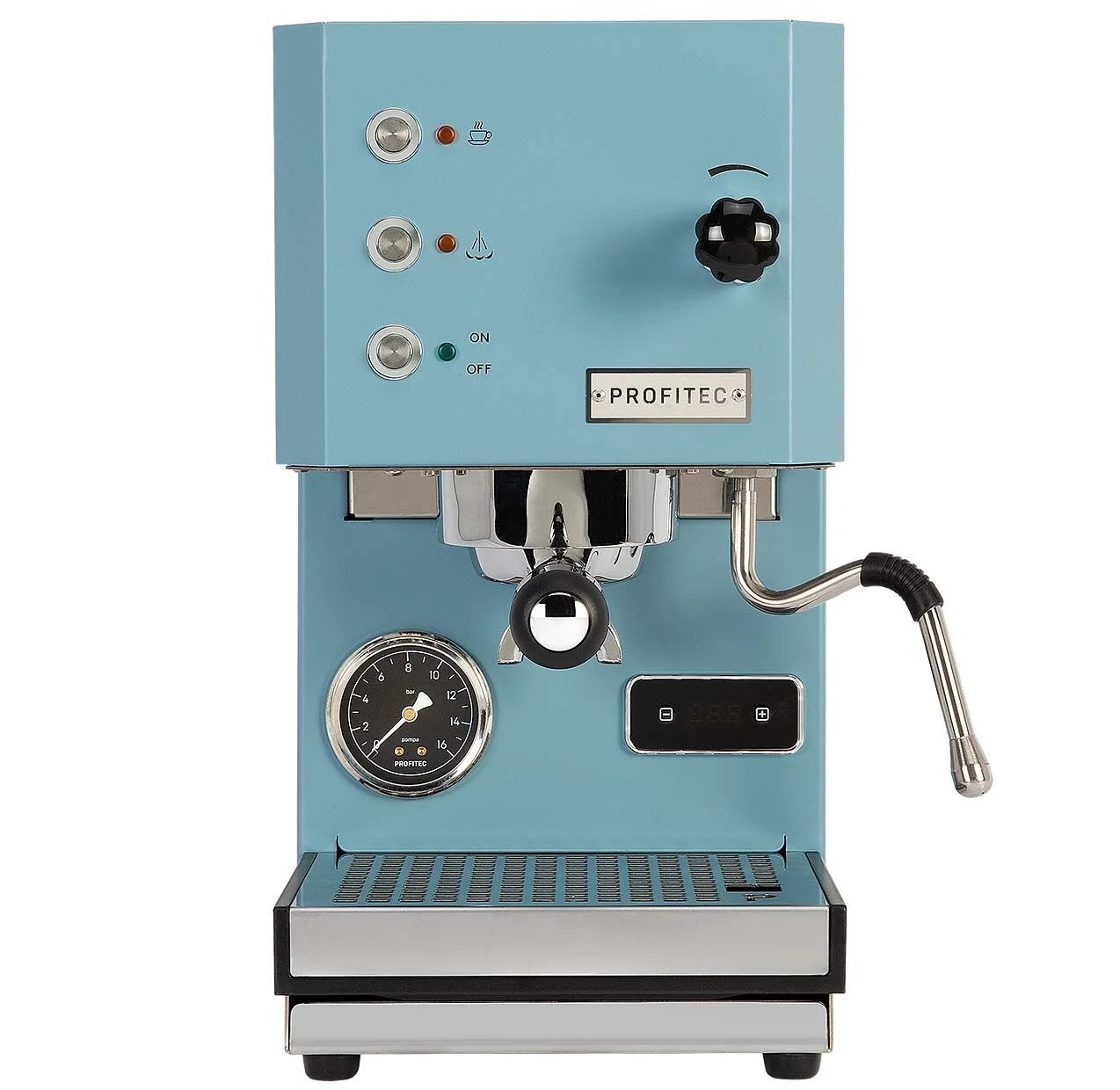
A ring group completely bypasses this journey. In machines like the brilliant Profitec Go and the Profitec Move, the group is essentially bolted directly to the brew boiler. The boiler and the group act as one continuous thermal mass. As the water inside the boiler heats up, that heat conducts instantly and directly into the group.
The Profitec Go is a single boiler machine which took the market by storm and for mine, it's amongst the very best of the single boiler machines. Its rapid heat up time is a massive part of its appeal. Because the heating element is warming the water and the group simultaneously through direct physical contact, you can pull a perfectly extracted shot of espresso in under 10 minutes. For a single boiler machine with this level of build quality, that's incredibly fast. Some entry level appliances use thermoblocks to heat water instantly, but thermoblocks struggle to provide the thermal stability needed for specialty coffee. The Profitec Go gives you actual boiler stability without the long wait.
The Profitec Move takes this exact same direct heating philosophy and applies it to a dual boiler platform. You get the phenomenal steam power of a dedicated steam boiler alongside the lightning fast heat up from the ring group brew boiler. If your absolute top priority is getting your morning flat white in your hands as quickly as possible without sacrificing extraction quality, ring group machines are incredibly hard to beat.
Reimagining a Classic: The Rapid Heat e-61
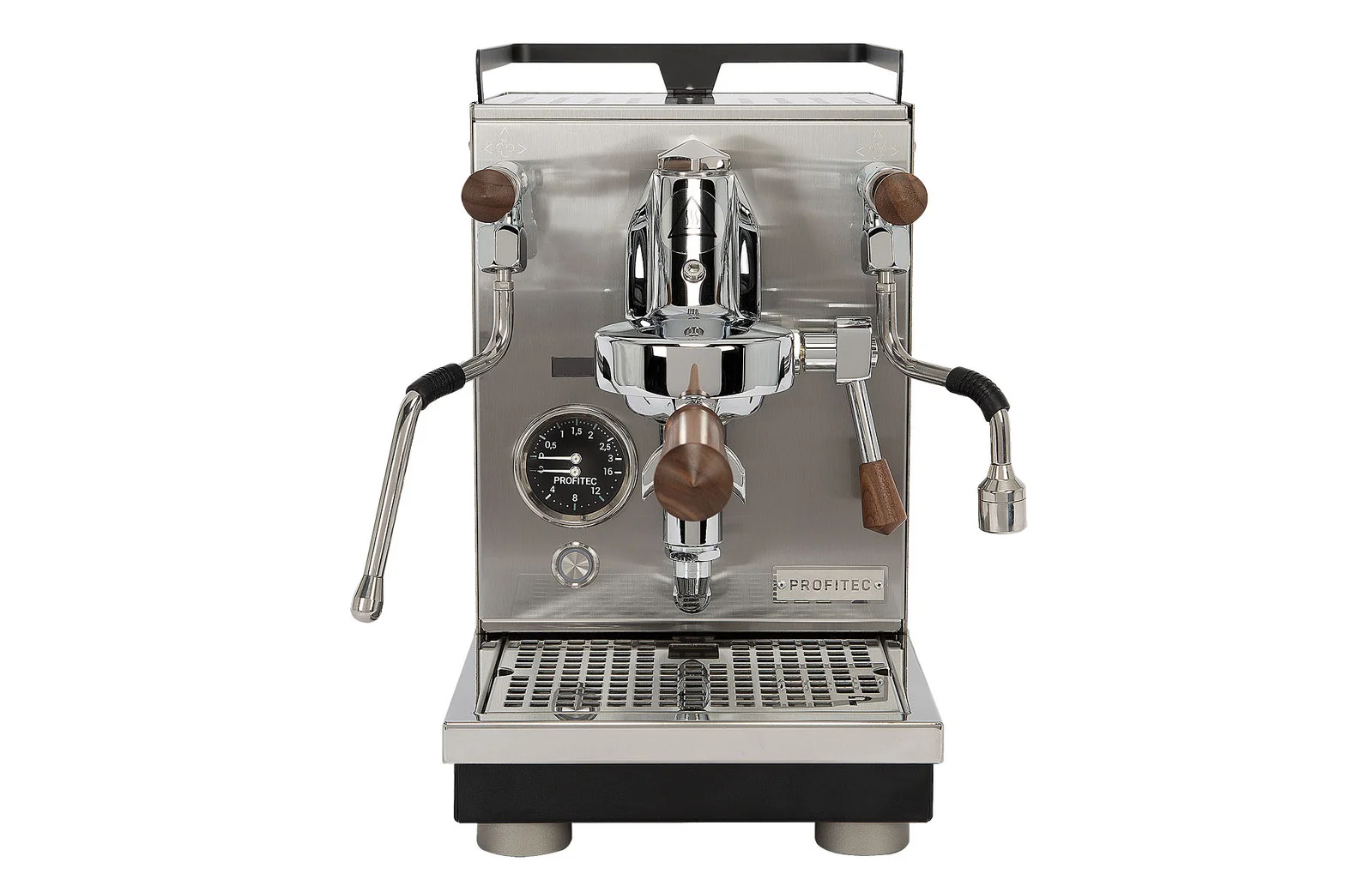
As wonderful as ring groups are, many espresso enthusiasts simply love the aesthetic and the tactile experience of the classic e-61 group. Designed back in 1961, this exposed, chrome plated brass masterpiece is an absolute icon of espresso culture. However, that enormous chunk of brass, weighing in at around four kilograms, is notoriously slow to heat.
The traditional e-61 relies on a thermosyphon loop. Hot water rises from the boiler, travels through a pipe to the group, transfers heat to the brass, cools slightly, and flows back down a second pipe to the bottom of the boiler. It is a brilliant, passive system but this takes an awful lot of time. Usually, you are waiting up to thirty to forty five minutes for the group head to reach total thermal equilibrium.
Recently, engineers at leading brands have figured out how to manipulate this system to our advantage. They have introduced rapid heat up modes on e-61 machines like the ECM Mechanika Slim, the ECM Mechanika Max, Rocket Espresso Fast models and the striking Rocket R58 Tune.
How do they achieve this? The secret lies in the machine's PID software and the thermosyphon restrictors. When you turn one of these rapid heat machines on from cold, the PID controller does not just target your desired brew temperature. Instead, it deliberately overshoots. It drives the boiler temperature much higher than normal for a very specific, carefully calculated period of time.
This superheated water flashes through the thermosyphon loop, aggressively transferring a massive amount of thermal energy into the heavy brass of the e-61 group. Because the temperature differential is so extreme, the heat transfer happens exponentially faster than it would under normal conditions. Right before the group becomes dangerously hot, the PID software cuts the power, flushes the excess heat through a cooling cycle, and smoothly settles the boiler back down to your precise target brew temperature.
The result is truly magical. You get the iconic look, the gentle preinfusion and the thermal stability of a true e-61 group, but it's ready to brew in around fifteen minutes. The Rocket R58 Tune and the ECM Mechanika Max utilise this software trick brilliantly, ensuring you never have to choose between classic design and modern convenience.
Active Heating: The e-61 Cartridge Heater
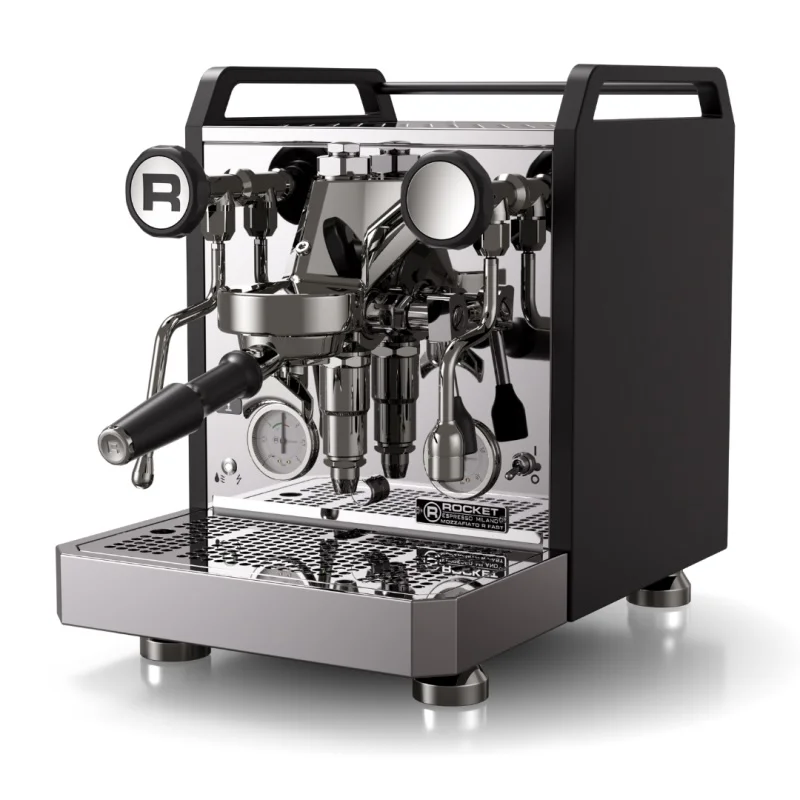
While superheating the thermosyphon is a brilliant software solution, ECM decided to take things a step further with the incredible Synchronika II. They looked at the e-61 group and asked a very simple question. Why rely purely on water to heat the brass when we can heat the brass directly?
The ECM Synchronika II introduced an active heating element, known as a cartridge heater, physically embedded inside the group. This is a game changing piece of hardware for the prosumer market.
Instead of waiting for the thermosyphon loop to passively warm the massive brass block, the machine actively pumps electrical energy directly into the metal the moment you flick the power switch. The cartridge heater works in tandem with the traditional hot water loop, bringing the entire group to the perfect brew temperature in roughly half the time of a standard e-61 machine. You'll have shots in seven minutes, though with this design, you still need to allow time for the steam boiler to come to temperature. Allow fifteen minutes. Fortunately the machine also includes an inbuilt timer, so this can all happen before you wake. This technology has been so well received, we'll see it in the forthcoming ECM Mechanika Max II as well; sometime in 2027.
Rocket Espresso have also jumped on this bandwagon with their FAST models: Giotto and Mozzafiato and you will also see it in the forthcoming R58 Tune.
This dual heating approach provides a few distinct advantages. First, it is exceptionally fast. You are looking at a machine that is fully stabilised and ready to pull café quality shots in around fifteen minutes. Secondly, it offers unprecedented temperature stability during the extraction itself. If the group starts to lose even a fraction of a degree while you are brewing multiple shots for guests, the cartridge heater can instantly pulse to maintain the absolute perfect thermal environment. It is the perfect marriage of classic mid-century design and cutting edge 21st century engineering.
Power Management: The Australian 10 Amp Dilemma
We also need to talk about power management. This is a topic that is particularly relevant for us here in Australia.
Our standard domestic power outlets are rated for 10 Amps at 240 Volts. This means a standard wall plug can safely deliver a maximum of 2400 watts of power. If an appliance tries to draw more than that, it will likely trip your circuit breaker. It's also illegal. Take note, Chinese manufacturers who are providing non-compliant equipment for self-import by consumers hoping to save a buck. We're all having fun at the party until the house burns down!
Power management presents a unique engineering challenge for high end dual boiler espresso machines. A typical prosumer machine has a heating element in the brew boiler and a separate heating element in the steam boiler. Often, these elements may be rated at 1400 or 1600 watts. If you simply turn both heating elements on at the same time to achieve a rapid heat up, the machine would instantly draw 3000 watts and trip your household power. It's a 15A machine and it requires a dedicated circuit.
Historically, manufacturers solved this with a simple relay system called brew priority. In the industry, we call this "interlocking". When you turn the machine on, it sends all the available power to the brew boiler first. Only after the brew boiler is fully heated does the machine switch the power over to the steam boiler. This keeps the power draw safely under 10A, but it significantly extends the total wait time before you can brew your coffee and steam your milk simultaneously.
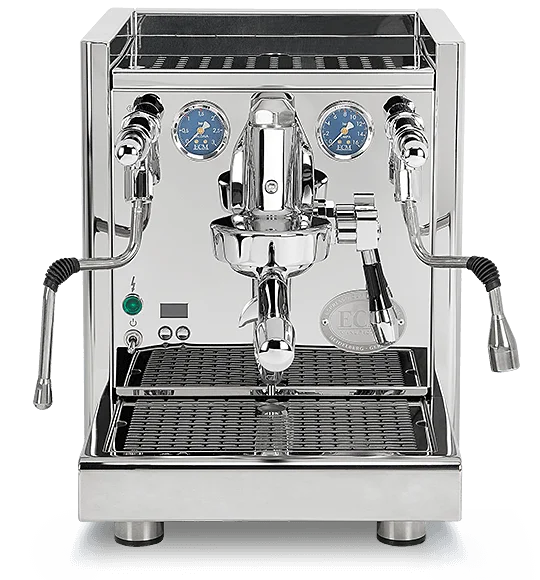
The latest generation of machines, such as the ECM Technika VI and the Profitec Drive, handle this limitation with incredible sophistication. Instead of a simple sequential relay, these machines utilise advanced PID power management systems paired with solid state relays to rapidly pulse power between the two boilers.
These smart controllers constantly monitor the temperature trajectory of both boilers simultaneously. They allocate power dynamically, sending a few seconds of energy to the brew boiler, then silently switching to send a few seconds of energy to the steam boiler. They calculate exactly how much energy is needed where, and they balance the load perfectly so that the total power draw never exceeds the critical 2400 watt threshold.
Because the system is actively heating both bodies of water concurrently rather than sequentially, the total time required to get both the brew circuit and the steam circuit to operating temperature is dramatically reduced. When paired with the rapid heat up software for the group, machines like the Profitec Drive and ECM Technika VI can have you pulling a shot and stretching milk for your morning flat white in record time, all while remaining perfectly safe, legal and electrically compliant for your standard Australian kitchen power point.
The Wrap Up
The era of waiting almost an hour for your espresso machine to wake up is officially over. Whether you are drawn to the direct efficiency of a ring group on the Profitec Go or Move, the clever software tricks of the Profitec Drive or the ECM Mechanika Max II, the active cartridge heating of the ECM Synchronika II, Rocket R58 Tune, Giotto Fast and Mozzafiato Fast, or the sophisticated power balancing of the Profitec Drive and ECM Technika VI, there is now a premium prosumer machine that respects your time.
When you are looking to upgrade your home coffee setup, you no longer have to compromise. You can have the stunning build quality, the commercial grade components, the flawless temperature stability, and the instant gratification that modern mornings demand.
Since it is just me running the show here at Talk Coffee, I spend my days testing these machines on our bench, and I am constantly amazed by how far the technology has come. If you are curious about how these machines perform in the real world, or if you want to see exactly how quickly they can get up to temperature, please reach out. I love exploring the technical side of these beautiful machines, and I am always happy to help you find the perfect fit for your setup.